
Lot 139
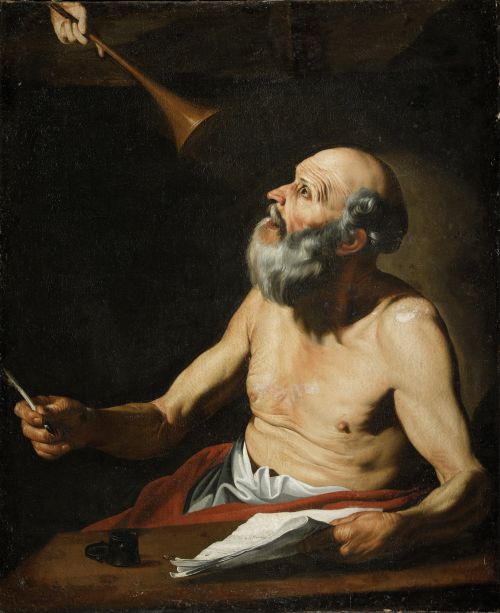
JOSE DE RIBERA (EL ''SPAGNOLETTO") Jativa, Valencia (1591)
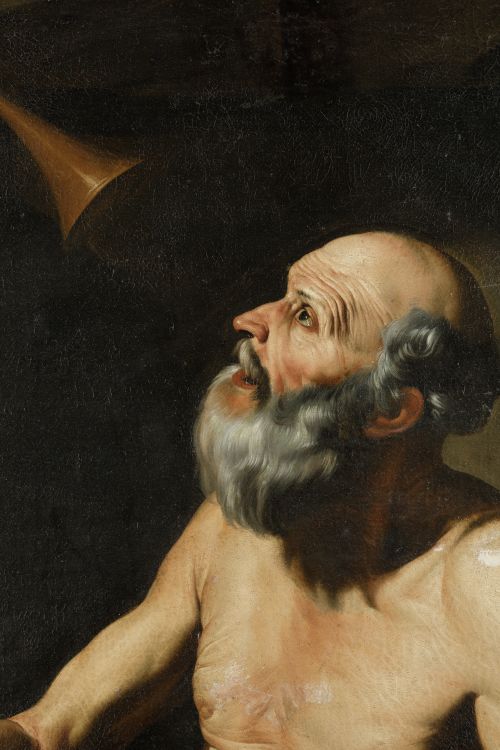
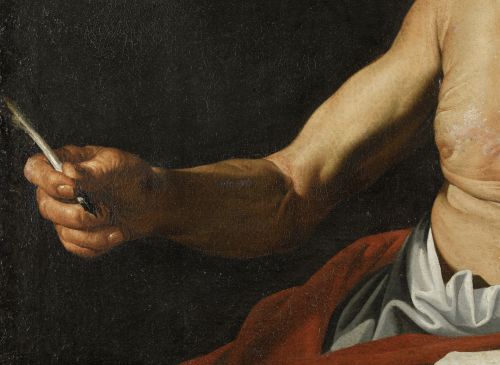
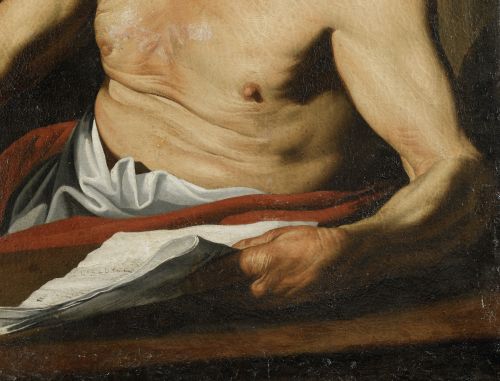
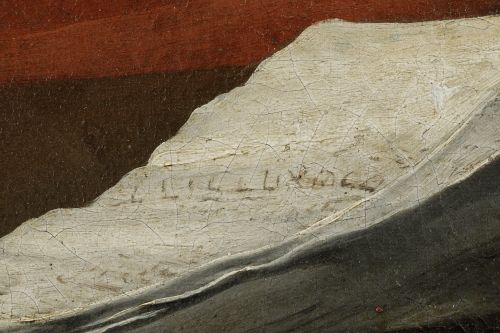
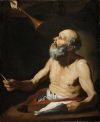
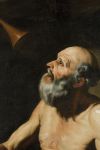
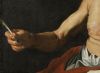
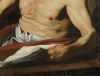
Oil on canvas. Provenance: Barcelona, Xavier Salas collection?; Barcelona, private collection. Bibliography: SPINOSA, N., Ribera. The Complete Works, Fundacion Arte Hispanico, Madrid, 2008, p. 327, cat. no. A42. Throughout his career, Ribera depicted the theme of Saint Jerome on several occasions. In fact, the oldest known signed work of his is the Saint Jerome in the Collection Art Gallery of Ontario, Toronto, dated between 1614 and 1615. His models share a number of common characteristics, all of them presenting, in a decidedly naturalistic style, an elderly man with a fairly high forehead. Deeply wrinkled face, silver hair, and a pronounced thinness. The proliferation of this type of image is justified by the popularity the saint achieved after the new edition of the Vulgate (the official Catholic Bible, prepared and translated into Latin by Saint Jerome himself), published in 1592 by Clement VIII. Also, in Ribera's own work, we must consider his inclination to paint elderly philosophers of Antiquity, presenting them, like Saint Jerome, as models of erudition and wisdom. This work reflects this spirit and shows clear stylistic affinities with other paintings by Ribera depicting philosophers, prophets, or apostles that share the same compositional approach and a similar naturalistic rendering of drapery, surfaces, and skin, thanks to dense and compact chromatic applications marked by powerful and sharp contrasts of light and shadow. Thus, we find Saint Jerome in this work, seated at a table in the act of writing, as he holds a quill pen in his right hand. He holds a scroll in his left hand. His gaze is directed towards heaven, from which emerges a hand holding a trumpet; divine symbols accompanied by a supernatural light that completely illuminates the figure of the saint, creating a striking contrast with the darkness of the background. The presence of the trumpet, sometimes played by an angel, alludes to the announcement of Saint Jerome's death and the Last Judgment. Its execution should be placed among the early works painted by Ribera between Rome and Naples, approximately between 1615 and 1616, both for its formal vigor and its expressive intensity, with solutions entirely similar to those found in works such as the Saint Anthony Abbot of El Conventet (Barcelona), the Saint Peter of Bloomington (Indiana), or the Saint Peter and Saint Paul of Strasbourg. We believe it could be the work published by Nicola Spinosa in the catalogue raisonne of Jose de Ribera (Spinosa 2008, A42). Its dimensions do not match, as this canvas is slightly smaller.However, it is possible that it may have suffered some damage, altering its proportions and the various objects arranged as a still life on the table. Dimensions: 120 x 98 cm.
Starting price 65.000 €
Recomended lots
Confirm
You are bidding €
At the time of auction we will contact you by phone:
You accept the conditions of the room by confirming your bid
Loading…
Conecting with the server
Are you sure you want to buy the lot?